
Australian Medical Supplies: Aged Care Equipment Made Simple
Choosing suitable australian health supplies for aged care can help older Australians manage everyday activities with greater comfort, safety and

Buying health products for home use can feel straightforward until several similar items appear to offer the same benefit. A shower chair, walking aid, support cushion, blood pressure monitor or therapy device may look suitable online, but small differences in size, adjustment, intended use and setup can affect whether it works safely for the person using it.
The right product should match the user, the task and the home environment. It should also come from a supplier that provides clear product information, operating instructions and meaningful support after purchase.
For families, carers and individuals comparing australian health supplies, this guide explains what to check before ordering healthcare equipment, when professional advice may be needed and how to compare suppliers without relying only on price.
Start by defining the exact problem the product needs to solve.
Someone searching for home health supplies may need help with walking, sitting, bathing, measuring a health indicator, managing discomfort or completing an everyday task. These are different needs and should not be treated as one general equipment category.
For example, a person who needs occasional support while walking indoors may require a different product from someone who needs continuous assistance outside the home. A cushion intended to improve everyday sitting comfort is also different from equipment prescribed to manage a particular medical condition.
Read the product’s intended use carefully. Do not assume that a familiar appearance means two products perform the same role.
Medical devices are defined partly by the purpose intended by the manufacturer or supplier. The TGA advises that labels, instructions, advertising and technical information can help determine what a device is intended to do.
When a product is being considered for treatment, diagnosis or management of a medical condition, advice from an appropriate health professional may be necessary.
The person using the equipment should be at the centre of the decision.
Consider their height, weight, grip strength, balance, mobility, vision and ability to understand the controls or instructions. A product that works well for one person may be unsuitable for another person with different abilities.
Adjustability can be useful, but only when the user or carer knows how to set the product correctly. A walking aid adjusted to the wrong height, for example, may be uncomfortable or difficult to control.
The person should also be able to get on, off, into or out of the equipment safely. Chairs, bathroom aids and mobility products may need to suit transfer movements as well as seated use.
Healthdirect notes that mobility aids should be chosen and fitted carefully because incorrect equipment or unsafe use can lead to injury. Health professionals such as occupational therapists, physiotherapists, nurses and doctors may help assess suitable options.
Product dimensions should be compared with the actual space where the equipment will be used.
Measure doorways, hallways, bathroom areas, bedside space and any narrow turns. Include handles, wheels, arms and other parts that extend beyond the main frame.
For a shower chair or commode, check the available floor area and the position of taps, screens, toilets and drains. For a mobility aid, consider whether it can pass through the narrowest doorway and turn within the rooms used each day.
Bedside equipment should be assessed against the bed height and surrounding furniture. A product may technically fit beside the bed but still leave too little room for safe movement or carer assistance.
Storage also matters. Folding equipment can be useful in a smaller home, but the user or carer must still be able to fold, lift and store it safely.
Measurements should be taken before ordering rather than estimated from photographs.
The same healthcare equipment may behave differently on carpet, tiles, timber flooring or uneven outdoor surfaces.
Check whether wheels, feet or non-slip components suit the intended floor. Bathroom products should remain stable in the actual wet-area environment and should be used according to their instructions.
Stairs, thresholds and changes in floor level may also affect whether a mobility product can be used throughout the home.
Daily routines should be considered as well. A chair that must be moved several times each day may need to be light enough for the person or carer to handle. Monitoring equipment should be stored somewhere accessible and used under appropriate conditions.
Cleaning requirements can influence suitability. Some products have removable covers or washable components, while others need a particular cleaning method to protect materials or electronics.
Ask how the item will fit into the person’s normal day, not only whether it fits into the room.
Not every health-related product carries the same level of risk.
Simple items such as adapted cutlery, non-slip mats and some everyday comfort aids may be easier to choose without extensive assessment. Products such as mobility equipment, adjustable beds, bed poles, transfer aids and some monitoring devices may require more careful selection, fitting or professional advice.
The NDIS describes low-risk assistive technology as equipment that is unlikely to cause harm during ordinary use and generally requires little professional assistance. Higher-risk equipment may need advice from an assistive-technology assessor or adviser.
Price alone does not determine risk. A low-cost product can still be unsuitable when it affects balance, transfers, circulation or another important part of care.
Read warnings, weight limits and user restrictions before purchasing. Where the intended use is unclear, contact the supplier or manufacturer.
Professional guidance is particularly useful when the person has complex mobility needs, a recent injury, reduced balance, skin concerns, changing health or difficulty transferring.
An occupational therapist may assess how the person completes daily activities within the home. A physiotherapist may advise on movement, walking and physical support. Nurses, doctors and other professionals may also provide recommendations depending on the person’s needs.
An assessment may help determine product dimensions, adjustment settings, support requirements and whether training is needed.
Some products should only be used with guidance from a qualified practitioner. The TGA advises consumers to seek health-professional advice when they are uncertain about a health product or medical device.
A retail description should not replace individual clinical advice.
Many products sold as medical devices in Australia are regulated by the Therapeutic Goods Administration.
Unless an exemption or exclusion applies, medical devices must be included in the Australian Register of Therapeutic Goods before they can be legally supplied in Australia. Examples include products such as bandages, medical gloves, blood pressure monitors and more complex healthcare equipment.
Buyers can ask the supplier whether the product requires ARTG inclusion and request information that identifies the relevant entry. The ARTG is a public database that can be searched to confirm therapeutic goods approved for supply.
Product information should clearly state the intended purpose, manufacturer or sponsor details and instructions for safe use. These details help consumers understand what the product is designed to do and who to contact if a problem occurs.
Not every item sold by a medical supply store is necessarily a regulated medical device. The regulatory position depends on its intended purpose and claims.
An Australian-looking website is not always operated by an Australian supplier.
Check for a genuine business name, physical or postal address, Australian contact information, returns terms and clear product details.
The TGA warns that medical products bought from unknown overseas websites may be counterfeit, contaminated, defective, improperly stored or not approved for supply in Australia. Consumers may also lose money if products are stopped at the border.
Be cautious when a seller makes strong medical claims but provides little information about the manufacturer, intended use or instructions.
A very low price should not outweigh concerns about product identity, quality or support.
For regulated products, ask whether the supplier can identify the Australian sponsor or ARTG entry where required.
The lowest purchase price may not provide the best long-term value.
Compare the product dimensions, weight capacity, adjustment range, materials and included accessories. Check whether batteries, electrodes, cuffs, covers, filters or other consumable parts need regular replacement.
For electrical medical equipment, confirm the power source, charging requirements and whether suitable Australian components are included.
A product may also require assembly or calibration before use. Ask what needs to be completed and whether the instructions are clear enough for the user or carer.
For mobility and support products, look at the complete size rather than only the seat or platform dimensions. Handles, wheels and frames may affect access and storage.
When comparing health care supplies, focus on suitability and ownership costs rather than product price alone.
Before ordering, read the warranty and returns terms.
Some personal-care and health products may have return restrictions after opening or use for hygiene and safety reasons. The supplier should explain these conditions before purchase.
Ask what happens if the product arrives damaged, develops a fault or does not match the description. Confirm who pays for return freight and whether repairs, replacement parts or technical support are available.
For frequently used medical equipment, replacement components can be important. A product that cannot be serviced may need to be replaced entirely when one small part fails.
Keep the invoice, instructions, model details and packaging information. NDIS participants may also need receipts and related documents when making claims for eligible assistive technology.
A reliable medical supply store should provide enough information for customers to understand what they are purchasing.
Product descriptions should include dimensions, intended use, weight capacity where relevant, included accessories and major limitations. Instructions or user manuals should be available for products requiring setup or ongoing operation.
The supplier should answer practical questions without making unsupported promises. They should also recommend professional advice when a product is outside the scope of general retail guidance.
Compare whether the store offers several suitable options or simply promotes the most expensive model.
Trust is supported by clear product information, Australian contact details, transparent returns terms and realistic explanations of what a product can and cannot do.
Large healthcare equipment may require more than standard parcel delivery.
Ask whether the product arrives assembled, partly assembled or boxed for the customer to set up. Confirm the package size, weight and whether someone must be present to receive it.
For bulky equipment, check whether delivery includes bringing the product inside the home or only leaving it at the property entrance.
Some equipment may need installation, adjustment or a demonstration. These services should be confirmed in writing rather than assumed.
The customer should also plan how packaging will be removed and whether the old product needs disposal.
A complete delivery arrangement can be particularly important for older customers, people with limited mobility and carers working alone.

Australian Health Care can be contacted when customers need help comparing health care supplies, home health products or medical equipment with similar features.
Supplier guidance may be useful when dimensions, accessories, adjustment ranges or product differences are unclear.
Explain who will use the product, what task it should support and where it will be used. Do not provide more personal medical information than is necessary for the retail enquiry.
For products requiring professional assessment, Australian Health Care can clarify general product information, but the final choice may still need advice from an occupational therapist, physiotherapist, doctor or another qualified professional.
The aim should be to identify an appropriate product category and provide accurate information rather than making an unsupported clinical recommendation.
Before contacting Australian Health Care or another medical equipment store, prepare the user’s relevant measurements and the dimensions of the available space.
Include any written recommendation from a health professional, particularly when it names a product type, adjustment range or required feature.
Explain whether the item will be used temporarily or over a longer period. Mention any access limitations, such as stairs, narrow doors or limited storage.
Ask about included parts, setup, instructions, warranty, returns and delivery.
For regulated medical equipment, request the product and supplier details needed to check its Australian supply status where applicable.
By combining accurate measurements, professional advice when needed and clear supplier information, customers can choose australian medical supplies with greater confidence and reduce the risk of buying equipment that is difficult or unsafe to use.
Choosing suitable australian health supplies for aged care can help older Australians manage everyday activities with greater comfort, safety and
Choosing a blood pressure monitor can be confusing when several devices appear to offer similar features. When comparing products through

When buying medical equipment, it is reasonable to ask whether the product can legally be supplied in Australia. However, terms
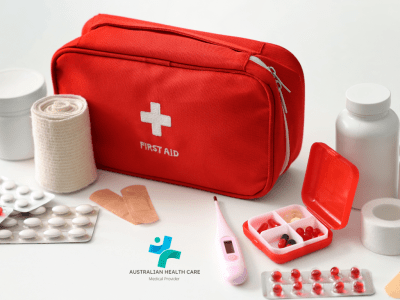
Keeping a small selection of practical health products at home can make everyday care easier when someone needs basic first